Workshop 1: Urban Sketching and Linocut
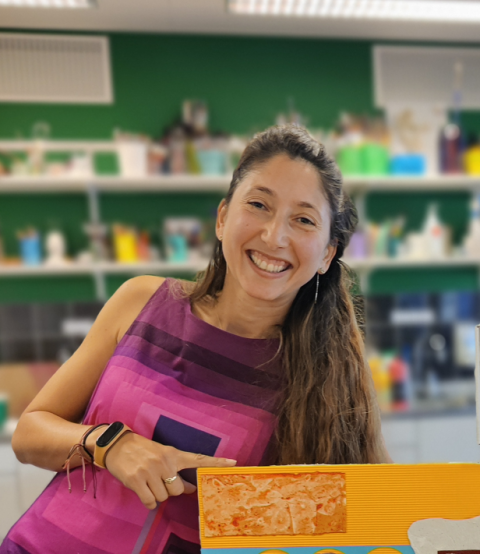
Teaching Staff: Diana Vestineanu
Diana Vestineanu is an international trainer, visual facilitator, and youth worker with more than ten years of experience in non-formal education, Erasmus+ projects, and creative learning methodologies. Passionate about visual thinking, urban sketching, graphic facilitation, and storytelling, she supports learners in transforming ideas into meaningful visual experiences that foster communication, reflection, and collaboration.
In this training series on Urban Sketching & Visual Communication, Diana will guide participants through a practical and creative learning journey aimed at developing essential skills for expressing ideas visually and communicating with clarity and confidence. The programme begins by exploring the role of visual communication in education, community work, and everyday life, introducing participants to the fundamentals of visual thinking and visual scribing. Through hands-on exercises, students will learn how to capture key ideas during presentations and discussions using simple drawings, symbols, icons, lettering, and visual structures.
Building on these foundations, participants will discover the principles of Urban Sketching, learning to observe their surroundings with curiosity and transform everyday places into expressive visual stories. Through guided outdoor sketching sessions, they will experiment with perspective, composition, line work, and storytelling while developing their own sketchbook as a creative visual journal.
Throughout the workshop, Diana integrates participatory methods, experiential learning, peer feedback, and reflective practice, encouraging participants to build confidence in their creative abilities regardless of their previous artistic experience. Her facilitation approach emphasises learning by doing, collaboration, observation, and the belief that everyone can draw as a means of thinking and communicating.
The workshop concludes with the development of an individual visual project, such as an illustrated sketchbook, infographic, visual journal, or digital design, which will be presented during an exhibition. By the end of the programme, participants will have developed practical competencies in visual communication, urban sketching, and creative storytelling, enabling them to communicate ideas effectively through both traditional and digital visual media.
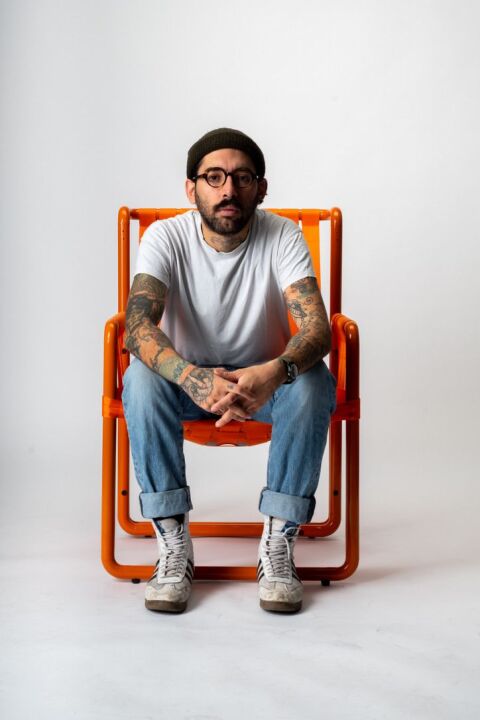
Leonardo Mesa Cabrera
Leonardo Mesa Cabrera, born in Bogota, studied Graphic Design in Universidad Los Libertadores in Bogotá, then specialised in Innovation and Stategic Design in Universidad Pontificia Bolivariana in Medellin. He got his master’s degree in Integrated Design at Anhalt University in Dessau, where he also pursues a PhD in Design.
He has been working as a designer since 2012, and was a Research Assistant of the Young City Makers project from 2023 to 2025, this project just got a nomination for the Design Awards in Colombia “Lapiz De Acero” in the Urban Interior Spaces Category. Looking always to make bridges within Academy and practice, he has been part of the Imagenpalabra Illustrations Festivals in Colombia from 2010 to 2018. Currently he is co-running the open workshop Druckbar where they focus on riso printing, music, and culture. Parallel to that he is engaged in several community initiatives in Dessau like Klink Festival, Mitte, among others. Since 2024, he is part of the board of VorOrt e. V. Dessau. His collaborations connect several initiatives in the region, but also cross borders working together with projects based in Italy, Colombia, France, Japan. His work has been exhibited and selected in Poster Biennals, from Bolivia, Mexico, Ecuador, and Poland.
Workshop Description
Urban Sketching
This workshop series is designed to equip students with a comprehensive set of skills in visual communication and creative expression. The program begins with an introduction to the role of visual communication in education, activism and everyday life. Participants will learn about scribing techniques, discovering how to capture ideas quickly through icons, symbols and simple sketches during live presentations. The training then transitions to Urban Sketching, where students are guided to observe and sketch their surroundings, gaining confidence in documenting architecture, people and city/rural life.
Building on these foundations, participants will explore infographic design, learning principles of data visualization, visual hierarchy and storytelling with images and text. They will also practice applying graphic design basics such as layout, color theory and composition, using both traditional and digital tools. Yuliia introduces participants to user-friendly design software, enabling them to create digital sketches, visual notes and infographics that communicate complex ideas in simple and appealing ways. The sessions also cover effective presentations, showing how to combine visual tools with storytelling for maximum impact.
The workshop culminates in a final project, where each participant produces a unique visual product: either a sketchbook, infographic or digital design; that demonstrates their acquired skills. By the end of the series, students will have developed a versatile toolkit for expressing ideas visually, empowering them to communicate with clarity, creativity and confidence.
Linocut
In this workshop, images of Magdeburg will be created and transformed. With sketchbooks and pencils, participants will wander through Magdeburg, capturing scenes from urban life and the city's diverse architecture. Stories will be told of places, barriers, diversity, and people, thereby gaining visibility.
Urban everyday life will not only be explored but also transformed into utopias of a future-oriented, inclusive, tolerant, and green city. The work process itself will reflect this transformation: the images captured through urban sketching will be translated into linocuts. Linocut necessitates a reduction to the essentials. Form, contrast, and structure are extracted from the urban sketches, thus simplifying the representation of diversity. At the same time, the multi-layered printing process in linocut can reflect the existing complexity. Furthermore, linocuts are reproducible and can be distributed throughout Magdeburg as street art. Thus, urban space could become a collective motif. A pictorial theme could emerge, shaped by the perspectives of several people, and would find its way back into urban space itself. Furthermore, the processes of creation and discussion are exhibited and thus made accessible to the public.
This workshop is made possible by: