Seminar 5: From Vision to Action
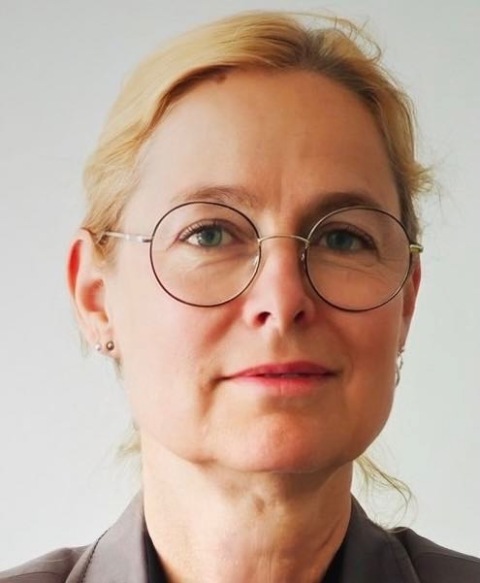
Teaching Staff: Anke Blöbaum
Dr. Anke Blöbaum is a senior researcher and lecturer at Otto von Guericke University Magdeburg in the Faculty of Natural Sciences, Department of Environmental Psychology. She studied psychology with a focus on environmental psychology and received her PhD in 2000 from Ruhr University Bochum. From 1994 to 2009 she worked there as a researcher and a lecturer. Since 2009 she has also been Managing Director of Kon-sys.
From 2010 to 2012 she was a visiting professor at Leibniz University Hannover in the Institute of Open Space Planning and Design. In 2012 she joined the University of Magdeburg, where her work focuses on people as actors in public spaces.
As a qualified mediator, Anke Blöbaum is particularly interested in participatory processes and methods for involving multiple stakeholders and users into the planning process. Her research analyses how conflicts may arise between climate protection, nature conservation, social concerns, and issues of fairness. She also examines how people perceive and evaluate natural and built environments, and develops theory-based interventions to support climate and nature conservation.
In national and international research projects, she has examined sustainable behaviour, commitment to nature conservation, and participatory planning processes. Beyond her academic work, she is dedicated to supporting environmental associations, NGOs, and processes of environmental transformation. She is the spokesperson of the German ad hoc expert committee for IPBES and co-editor of the journal Environmental Psychology Open.
Seminar Description
From Vision to Action
During the summer school, we will explore a scenario-based, participatory approach known as backcasting.
Originally proposed in the 1970s in energy studies, backcasting was later applied to sustainability planning (e.g., Robinson 1990) and has since evolved into a widely used participatory approach.
Quist and Vergragt (2006) define backcasting as “first creating a desirable (sustainable) future vision or normative scenario, followed by looking back at how this desirable future could be achieved, before defining and planning follow-up activities and developing strategies leading towards that desirable future” (p. 1028).
After a short introduction to the key ideas, concepts, and methods of backcasting, we will try out a backcasting exercise together for the Port of Science in Magdeburg. Once we have agreed on a common focus, we will go through the two main steps of the process: first, imagining our shared future, and then working out the steps to get there. In this way, we want to shape ideas together for a sustainable Port of Science of tomorrow.
We will practice backcasting in a simulation scenario, taking on different roles to experience how important it is to involve diverse stakeholders and citizen groups in participatory planning processes. Along the way, we will explore various creative participatory methods and try them out in a hands-on way.
Finally, we will visualize the vision we have developed and the implementation steps we have derived, and present them together at the closing event of the summer school.
Literature
- Quist, J. & Vergragt, P. (2006). Past and future of backcasting: The shift to stakeholder participation and a proposal for a methodological framework. Futures, 38, 1027-1045.
- Robinson, J. B. (1990). Futures under Glass - A recipe for people who hate to predict. Futures, 820-840.
- Robinson, J.B, (2003). Future Subjunctive: Backcasting as Social Learning, Futures, 35 (8), 839-856.
- Vergragt, P. & Van Grootveld, G. (1994) Sustainable Technology Development In the Netherlands: the first phase of the dutch STD programme. J. Cleaner Prod, 2(3-4), 133-137.